Thailand Etiquette for Students and Interns
Understanding Thai etiquette will help you build respect and navigate social and professional situations with confidence.
Thailand Pathways Team
Editorial Team · Bangkok
September 10, 2026 · Updated September 10, 2026
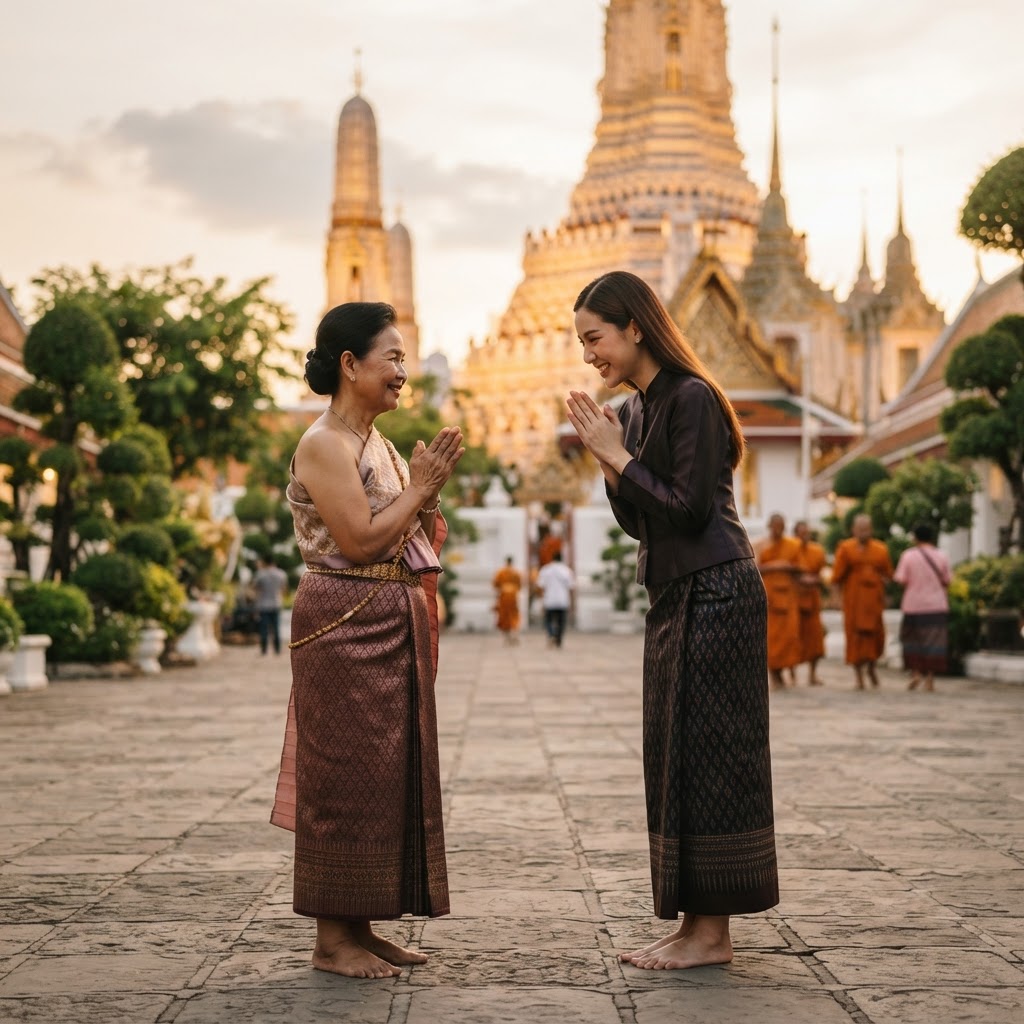
The Wai: Thailand's Traditional Greeting
The wai is the traditional Thai greeting, made by pressing your palms together in a prayer-like gesture and bowing slightly. The higher your hands and the deeper the bow, the more respect you show. As a student or intern, you will be expected to return a wai when one is offered to you.
In professional settings, a slight bow with hands at chest level is appropriate when greeting colleagues, supervisors, or hosts. If someone wais you, wai back — but if someone younger or lower in status wais you first, a simple smile and nod may suffice.
Temple Etiquette
Thailand is a predominantly Buddhist country, and temples (wats) are sacred spaces. When visiting:
- Dress modestly — cover shoulders and knees
- Remove shoes before entering temple buildings
- Do not point your feet at Buddha images or monks
- Women should not touch monks or hand things directly to them
- Do not climb on or pose disrespectfully with Buddha statues
Dining Customs
Thai dining has its own set of norms:
- Use a fork and spoon — The fork pushes food onto the spoon, which goes to your mouth. Chopsticks are used for noodle dishes.
- Sharing is normal — Thai meals are typically shared family-style. Take small portions from the communal dishes.
- Don't stick chopsticks upright in rice — This resembles funeral offerings and is considered bad luck.
- Wait for the host — If you are a guest, wait for your host to begin eating.
Respect for the Royal Family
The Thai royal family is held in very high regard. Disrespectful comments about the monarchy are not only culturally offensive but also illegal under Thai law. Always show respect when the national anthem is played (typically at 8am and 6pm in public spaces), and stand still if you hear it.
Social Norms
- Keep your cool — Losing your temper in public is seen as a loss of face. Stay calm and composed, even in frustrating situations.
- Use your right hand — Pass items and eat with your right hand. The left hand is considered unclean.
- Don't touch heads — The head is considered the most sacred part of the body. Do not touch someone's head or hair.
- Remove shoes — Take off your shoes when entering someone's home, and often when entering shops and small businesses.
- Dress appropriately — In professional settings, dress neatly. In temples and government buildings, cover shoulders and knees.
Workplace Etiquette
- Address people respectfully — Use "khun" (a polite title) before first names.
- Be punctual — Arriving on time shows respect.
- Save face — Avoid publicly criticizing or contradicting colleagues. If you need to address a problem, do so privately and diplomatically.
- Build relationships — Personal relationships are valued in Thai business culture. Take time to get to know your colleagues.
Key Takeaways
- Learn the wai — it is the foundation of Thai social interaction.
- Dress and behave respectfully in temples.
- Never speak disrespectfully about the royal family.
- Stay calm and composed — losing your temper causes loss of face for everyone.