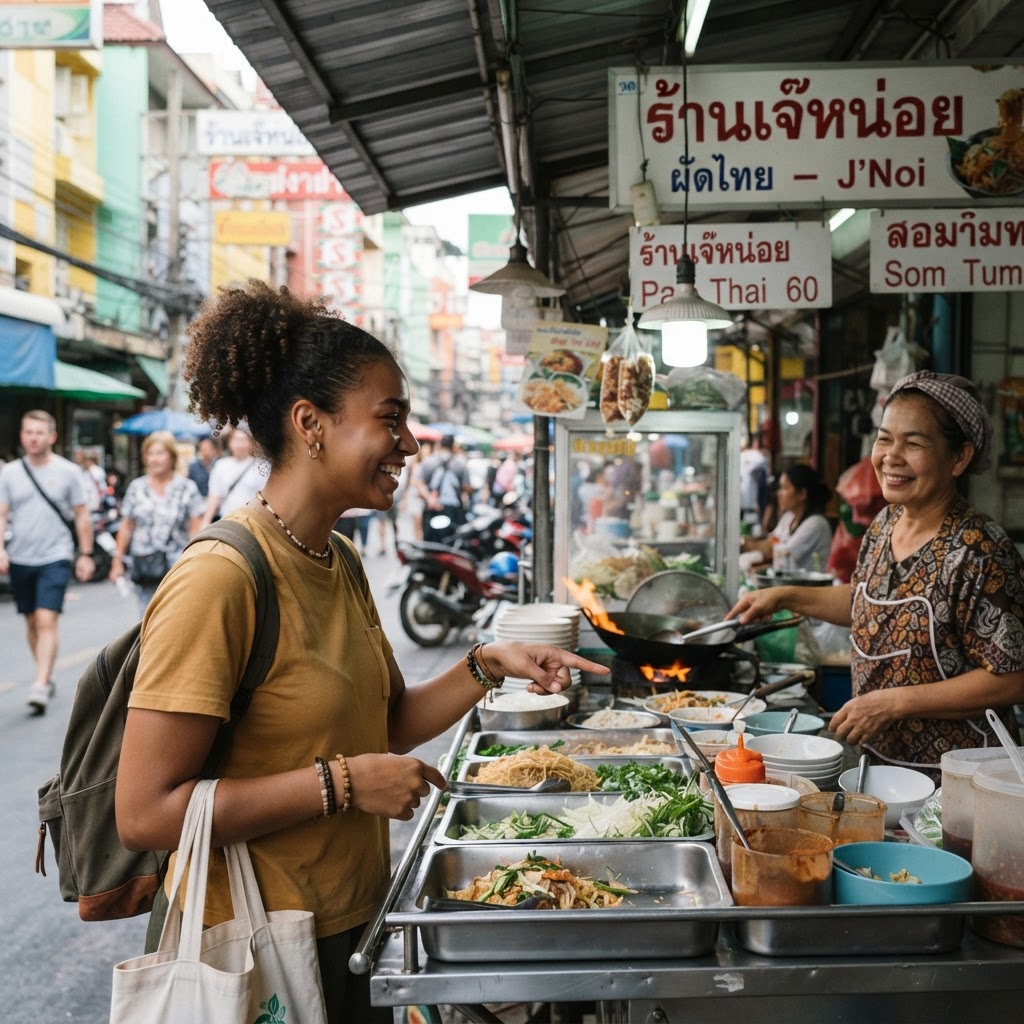
The First Time Thailand Feels Different
The psychological experience of arriving somewhere where ordinary things suddenly require more thought — sensory overload, unfamiliar routines, frustration and adaptation.
Thailand Pathways Editorial Team
Thailand Pathways Editorial Team
September 13, 2026 · Updated September 13, 2026

The First Time Thailand Feels Different
There is a specific moment — usually in the first few days — when Thailand stops feeling like an adventure and starts feeling like a place you need to figure out.
It might happen in a 7-Eleven. It might happen when you cannot communicate what you need. It might happen when you realise the bus you are on is not going where you thought.
This is not a problem. It is the experience.
Sensory Overload Is Real
Thailand is loud, colourful, fragrant and visually dense. The combination of heat, noise, traffic, smells and unfamiliar signage creates a genuine cognitive load.
Your brain is processing more information than usual. This is why you feel tired by mid-afternoon in the first week, even if you have not done much.
This passes. Your brain adapts.
Unfamiliar Routines
Simple things require thought. Buying groceries. Ordering food. Paying for things. Finding your way. Each of these involves small decisions and small uncertainties that, at home, you handle automatically.
In Thailand, you have to relearn these routines. This is not a sign that Thailand is difficult. It is a sign that you are in a new environment.
The Frustration Curve
Most students experience a predictable pattern:
- Excitement — Everything is new and interesting.
- Frustration — Simple things feel hard.
- Adaptation — You start figuring things out.
- Comfort — The unfamiliar becomes normal.
The frustration phase is not a sign that something is wrong. It is a normal part of cultural adjustment.
Unfamiliar Does Not Mean Wrong
The most important shift is recognising that different is not the same as wrong.
When someone responds indirectly, that is not dishonesty. When a process takes longer, that is not inefficiency. When a social norm is unfamiliar, that is not incorrect.
Thailand has its own logic, shaped by history, culture and practical realities. Understanding that logic takes time. But the first step is simply acknowledging that it exists.
What Helps
- Give yourself permission to be tired.
- Ask questions instead of making assumptions.
- Observe before acting.
- Talk to other students who have been here longer.
- Keep a sense of humour.
Key Takeaway
The moment Thailand feels different is the moment the experience actually begins. The discomfort is not a barrier — it is the process.