What Students Wish They Knew Before Coming to Thailand
Practical realities students wish they understood before arriving — pace of life, weather, food, transport, communication, and the gap between visiting and living.
Thailand Pathways Editorial Team
Thailand Pathways Editorial Team
September 13, 2026 · Updated September 13, 2026
What Students Wish They Knew Before Coming to Thailand
You've read the guides. You've seen the photos. You think you know what Thailand will be like. But arriving somewhere new is always different from imagining it — and Thailand is no exception.
This article covers the practical realities that students frequently mention they wish they had understood before arriving.
The Pace of Life Is Different
Thailand operates on its own rhythm. Things may take longer than expected. Service in restaurants can be unhurried. Bureaucracy can be slow. Internet speeds vary.
This is not inefficiency — it is a different relationship with time. Fighting it creates frustration. Accepting it creates space to observe, adapt and enjoy the experience more fully.
The Weather Is Not Just "Hot"
Bangkok is one of the hottest major cities in the world. The heat is humid, persistent and physically demanding, especially during the rainy season (roughly May to October).
Students who underestimate the impact of constant heat on energy levels, sleep quality and concentration often struggle in the first weeks. Planning around the heat — morning activities, shaded routes, regular hydration — makes a significant difference.
Food Is Everywhere — and That Changes Everything
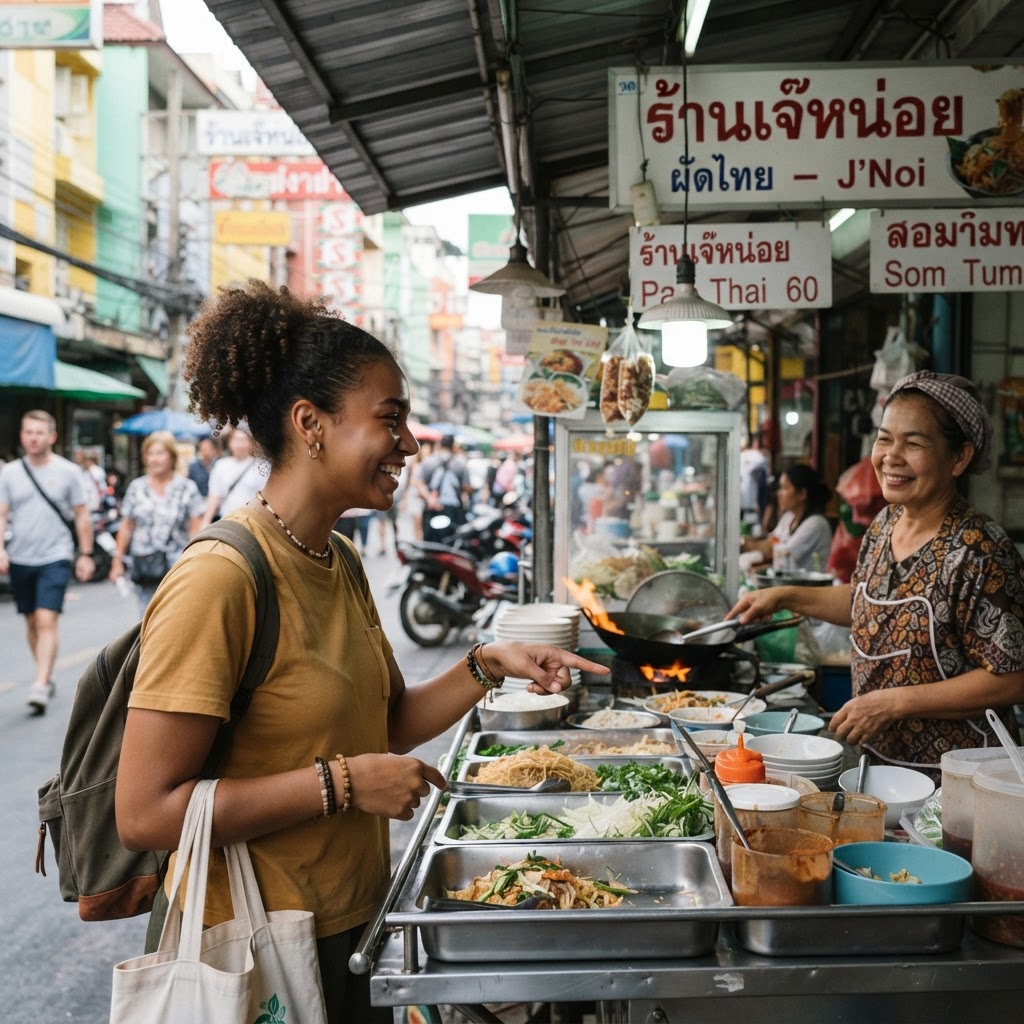
Street food is not a novelty in Thailand. It is daily life. You can eat well for 40–60 baht per meal. This changes your relationship with cooking, grocery shopping and socialising.
But it also means you need to learn which stalls are safe, how to communicate dietary needs, and how to navigate spice levels if you are not used to Thai cuisine.
Transport Requires Learning
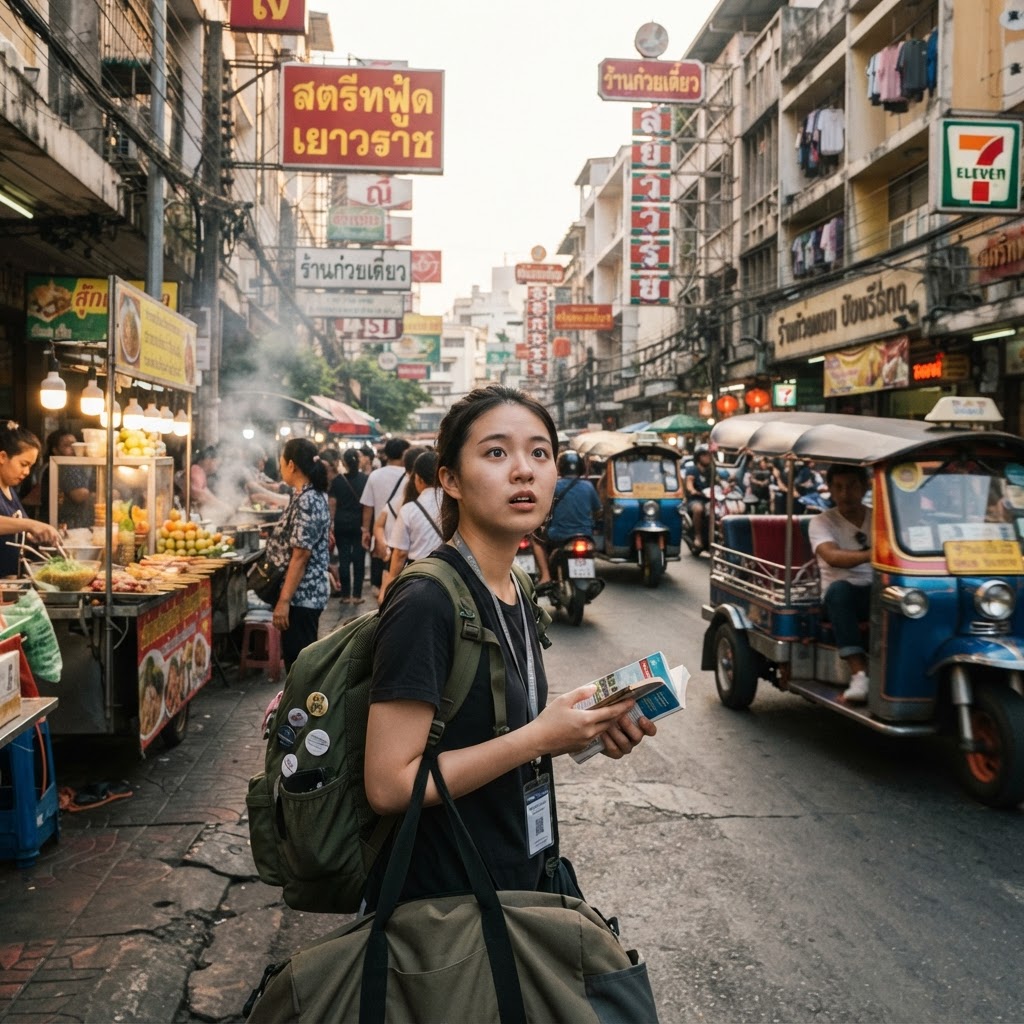
The BTS Skytrain and MRT are efficient in Bangkok. Motorbike taxis are fast. Taxis are affordable. But each has its own logic — pricing, etiquette, when to use which, how to communicate destinations.
Students who assume transport will work like it does at home often waste money and time in the first weeks.
Communication Is More Than Language
Many Thais speak functional English, especially in urban areas. But communication is not just about vocabulary. It is about indirectness, context, politeness and relationship.
Learning a few words of Thai helps. But understanding how communication works here matters more than phrase memorisation.
Visiting Thailand Is Not the Same as Living Here
A two-week holiday gives you a snapshot. Living here for months reveals the texture — the routines, the frustrations, the small victories, the cultural nuances that only become visible through repetition.
Students who arrive expecting a continuous holiday often feel disillusioned. Students who arrive expecting a real, complex, sometimes challenging but deeply rewarding experience tend to thrive.
Key Takeaway
Thailand is not difficult to navigate — but it is different. The students who adjust fastest are not the ones who prepared the most, but the ones who expected things to be different and stayed open to learning.
Explore More
Explore more resources for preparing to live and learn in Thailand.