When Does an Experience Become Learning?
The difference between experience and learning — observation, questioning, analysis, reflection and application make an experience educational.
Thailand Pathways Editorial Team
Thailand Pathways Editorial Team
September 13, 2026 · Updated September 13, 2026

When Does an Experience Become Learning?
Being somewhere different is not automatically educational. Travel does not equal learning. Exposure does not equal understanding.
This is a critical distinction for students, educators and anyone involved in experiential learning. An experience becomes learning only when it is processed intentionally.
The Learning Process
Genuine experiential learning follows a process:
1. Experience
Something happens. You encounter a situation, a person, a challenge or a new context.
2. Observation
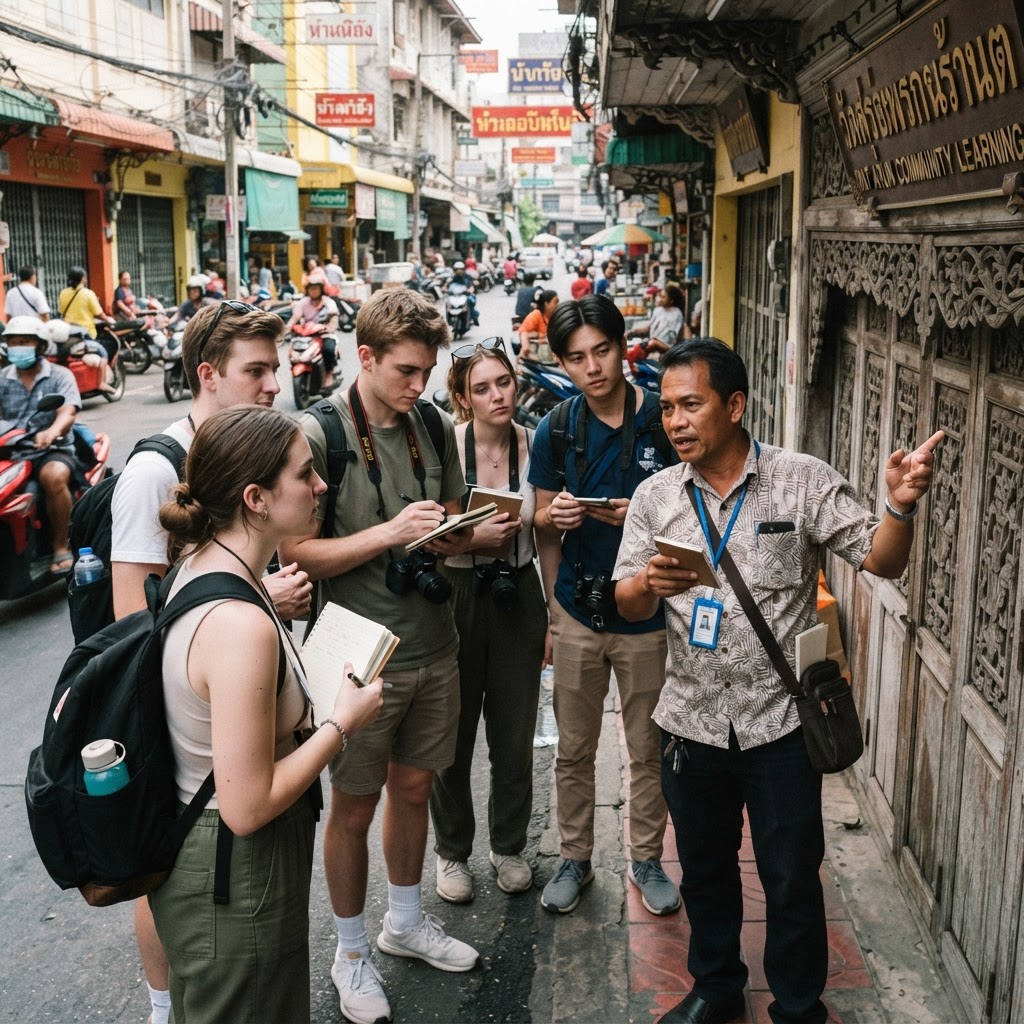
You notice what happened. You pay attention to the details — what was said, what was done, how you felt, what was surprising.
3. Questioning
You ask: Why did that happen? What does this mean? How is this different from what I expected? What assumptions am I making?
4. Analysis
You examine the experience in context. What cultural, social, historical or practical factors are at play? What patterns do I see? How does this connect to what I already know?
5. Reflection
You consider: What did I learn? How did this change my understanding? What would I do differently? How does this connect to my goals and values?
6. Application
You use what you learned. In future situations, in your studies, in your career, in your relationships. Learning that is not applied tends to fade.
Why This Matters
Many students return from abroad with rich experiences but thin learning. They had a great time. They saw interesting things. But they cannot articulate what they learned, how they changed, or how the experience connects to their future.
This is not because the experience lacked value. It is because the learning process was not engaged. The experience happened, but the reflection, analysis and application did not.
How to Make Experience Become Learning
Keep a Reflective Journal
Write not just what happened, but what you thought about it. What surprised you? What confused you? What changed your perspective?
Ask Questions
Do not accept experiences at face value. Ask why things work the way they do. Ask how they connect to what you know. Ask what they reveal about the culture, the context and yourself.
Discuss with Others
Talk about your experiences with peers, mentors and local contacts. Different perspectives reveal what you might have missed.
Connect to Your Studies
Relate what you experience to your academic field. How does what you are seeing connect to theory? How does it challenge or confirm what you have learned in class?
Create Something
Write, present, build or design something that captures what you learned. Creating forces synthesis — and it gives you something tangible to show for your experience.
Key Takeaway
Experience is the raw material. Learning is what you do with it. The difference between a student who had an experience and a student who learned is intention.